
The Province has introduced new housing rules to increase housing supply across BC (Bill 44). These changes require local governments, including Oak Bay, to allow more small-scale housing in areas that were previously limited to single-detached and duplex homes.
On this page
The Province has introduced new housing rules to increase housing supply across BC (Bill 44). These changes require local governments, including Oak Bay, to allow more small-scale housing in areas that were previously limited to single-detached and duplex homes.
In June 2024, Oak Bay updated its bylaws to comply with this legislation and establish the Infill Housing Program.
On this page
What is Infill Housing?
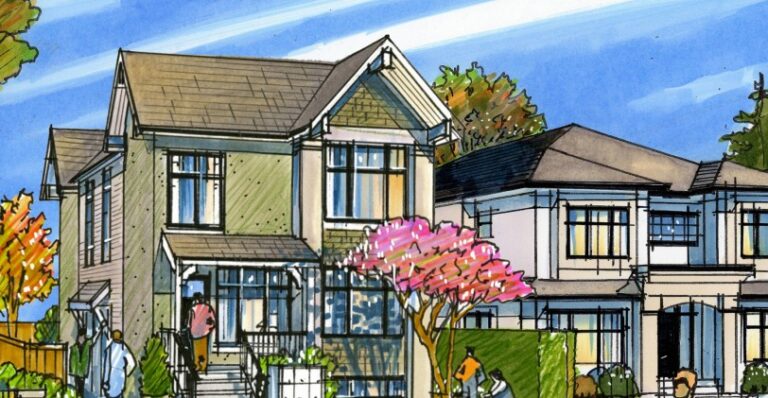
Infill housing includes a range of ground-oriented homes, meaning homes with direct access to the ground rather than apartment-style buildings. It can include single-detached homes, duplexes, triplexes, multiplexes, townhouses, accessory dwelling units and secondary suites.
Under current provincial rules and Oak Bay’s bylaw changes, the program requires municipalities across BC to allow for up to four units per lot in what used to be “single-family” areas.
What does the program allow?
Oak Bay updated its Zoning Bylaw and Parking Facilities Bylaw to meet provincial housing requirements and make it possible to build more small-scale housing in residential areas.
Key changes include:
- Allowing up to three or four units on all residential zoned lots, depending on lot size and context
- Allowing garden suites and carriage houses, referred to as Accessory Dwelling Units (or ADUs)
- Renaming affected single-detached zones from “RS/One Family” to “R/Residential”
The bylaw changes also simplified some technical requirements to make small-scale infill housing possible, including changes to parking requirements, building height, setbacks, lot coverage, unit sizes, live landscaping, and other criteria.
Continue reading to learn more about these changes
What is Infill Housing?
Infill housing includes a range of ground-oriented homes, meaning homes with direct access to the ground rather than apartment-style buildings. It can include single-detached homes, duplexes, triplexes, multiplexes, townhouses, accessory dwelling units and secondary suites.
Under current provincial rules and Oak Bay’s bylaw changes, the program requires municipalities across BC to allow for up to four units per lot in what used to be “single-family” areas.
What does the program allow?
Oak Bay updated its Zoning Bylaw and Parking Facilities Bylaw to meet provincial housing requirements and make it possible to build more small-scale housing in residential areas.
Key changes include:
- Allowing up to three or four units on all residential zoned lots, depending on lot size and context
- Allowing garden suites and carriage houses, referred to as Accessory Dwelling Units (or ADUs)
- Renaming affected single-detached zones from “RS/One Family” to “R/Residential”
The bylaw changes also simplified some technical requirements to make small-scale infill housing possible, including changes to parking requirements, building height, setbacks, lot coverage, unit sizes, live landscaping, and other criteria.
Continue reading to learn more about these changes
How does the program help protect Oak Bay's character?
Oak Bay designed the Infill Housing Program to support more housing options while helping new developments fit within the community’s existing character.
The program is guided by three principles developed in 2022:

Provide diverse housing options
The program allows a wider range of housing types, including duplexes, triplexes, fourplexes, garden suites, carriage houses, and secondary suites.
Support ease of implementation
Smaller infill housing projects with one or two units generally only require a Building Permit, while projects with three or four units require a form and character Development Permit.
Cherish what the community loves
The Zoning Bylaw regulations include new tools intended to help protect community character over the long term. Oak Bay adapted the provincial guidelines to fit the community’s context.
How does the program help protect Oak Bay's character?
Oak Bay designed the Infill Housing Program to support more housing options while helping new developments fit within the community’s existing character.
The program is guided by three principles developed in 2022:
Provide diverse housing options
The program allows a wider range of housing types, including duplexes, triplexes, fourplexes, garden suites, carriage houses, and secondary suites.
Support ease of implementation
Smaller infill housing projects with one or two units generally only require a Building Permit, while projects with three or four units require a form and character Development Permit.
Cherish what the community loves
The Zoning Bylaw regulations include new tools intended to help protect community character over the long term. Oak Bay adapted the provincial guidelines to fit the community’s context.
How are neighbourhood impacts managed?
In 2024, when Oak Bay established the Infill Housing regulations, the District also needed to meet new Provincial requirements for Small-Scale Multi-Unit Housing. The District carefully reviewed how these requirements could work best in Oak Bay.
The current regulations include several features that applicants must follow:
Density
Each residential zone has Floor Area Ratio (FAR) limits that control how large a building can be relative to the lot size. These limits allow up to 4 units, as required by the Province, while also helping prevent buildings from becoming too large for the property.
Did you know?
In large-lot zones, Oak Bay reduced density limits to prevent oversized multiplexes.
Live Landscaping
New landscaping requirements include space for trees, planted areas, and other greenery.
Height and Storeys
Building heights increased from previous limits but remain lower than the heights recommended by the Province.
Lot Coverage and Setbacks
Lot coverage limits control how much of a lot buildings can cover. These limits also help rainwater soak into the ground.
Setbacks control how close buildings can be to property lines and neighbouring homes. While Oak Bay reduced setbacks from previous limits, they remain larger than the provincially recommended minimums.
Did you know?
Front setbacks are typically 6 m to help protect existing trees along streets and front yards.
Parking
Parking minimums set the minimum number of parking spaces required for a property. Oak Bay reduced these requirements in response to Provincial requirements and changing housing needs. The regulations also help avoid large paved parking areas on residential lots.
Impermeable Surface Limits
Impermeable surfaces are hard surfaces, such as pavement or concrete, that prevent water from penetrating the ground. Limits on impermeable surfaces help support rainwater drainage and reduce runoff.
How are neighbourhood impacts managed?
In 2024, when Oak Bay established the Infill Housing regulations, the District also needed to meet new Provincial requirements for Small-Scale Multi-Unit Housing. The District carefully reviewed how these requirements could work best in Oak Bay.
The current regulations include several features that applicants must follow:
Density
Each residential zone has Floor Area Ratio (FAR) limits that control how large a building can be relative to the lot size. These limits allow up to 4 units, as required by the Province, while also helping prevent buildings from becoming too large for the property.
Did you know?
In large-lot zones, Oak Bay reduced density limits to prevent oversized multiplexes.
Live Landscaping
New landscaping requirements include space for trees, planted areas, and other greenery.
Height and Storeys
Building heights increased from previous limits but remain lower than the heights recommended by the Province.
Lot Coverage and Setbacks
Lot coverage limits control how much of a lot buildings can cover. These limits also help rainwater soak into the ground.
Setbacks control how close buildings can be to property lines and neighbouring homes. While Oak Bay reduced setbacks from previous limits, they remain larger than the provincially recommended minimums.
Did you know?
Front setbacks are typically 6 m to help protect existing trees along streets and front yards.
Parking
Parking minimums set the minimum number of parking spaces required for a property. Oak Bay reduced these requirements in response to Provincial requirements and changing housing needs. The regulations also help avoid large paved parking areas on residential lots.
Impermeable Surface Limits
Impermeable surfaces are hard surfaces, such as pavement or concrete, that prevent water from penetrating the ground. Limits on impermeable surfaces help support rainwater drainage and reduce runoff.
Did you know?
Many projects must also follow design guidelines that address privacy between homes, sunlight blocking, and how new buildings fit alongside existing homes and streets. Different rules and requirements apply depending on the property and type of project.
How the rules vary by zone
The details of what is allowed may vary depending on your zone, lot size, and whether your property has heritage status. Click the zone summaries below to learn more.
How the rules vary by zone
The details of what is allowed may vary depending on your zone, lot size, and whether your property has heritage status. Click the icons below to learn more.
How do I know if this applies to my property?
To find out whether your property may be eligible for infill housing, start by checking Oak Bay’s online map and zoning information.
The three main things to look for are:
- Your zone
- Your lot size
- Whether your property has heritage status
To gather this information, look up your property on Oak Bay’s public GIS map, available here. Launch the map, click ‘Find parcel by address,’ and enter your address exactly.
Your parcel should be highlighted on the map, and you will find the corresponding parcel ID, address, lot square footage, home age, and zoning. Click the arrow to the right of the text for additional details.
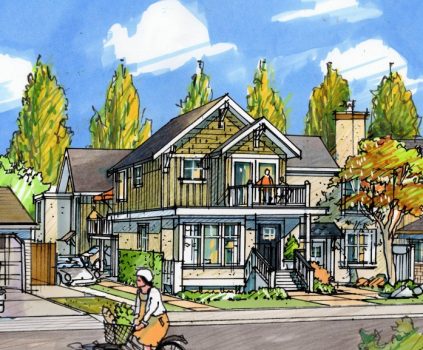
How do I know if this applies to my property?
To find out whether your property may be eligible for infill housing, start by checking Oak Bay’s online map and zoning information.
The three main things to look for are:
- Your zone
- Your lot size
- Whether your property has heritage status
To gather this information, look up your property on Oak Bay’s public GIS map, available here. Launch the map, click ‘Find parcel by address,’ and enter your address exactly.
Your parcel should be highlighted on the map, and you will find the corresponding parcel ID, address, lot square footage, home age, and zoning. Click the arrow to the right of the text for additional details.
Once you have this information, refer to the flowchart to determine eligibility and the permit process.
Review the Infill Housing How-To Guide for more information on determining eligibility and recommended steps if you wish to build infill housing on your lot.
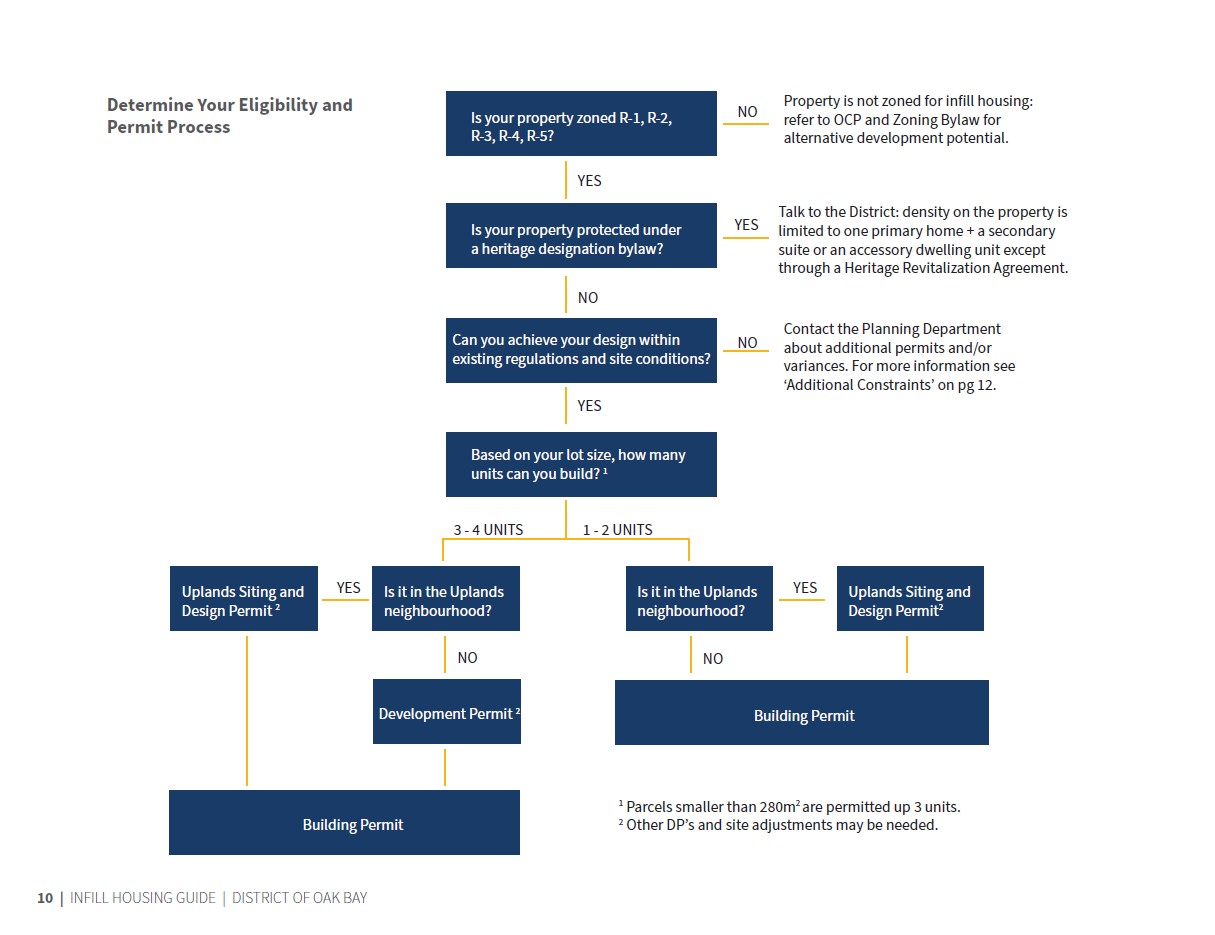
Once you have this information, refer to the flowchart to determine eligibility and the permit process.
Review the Infill Housing How-To Guide for more information on determining eligibility and recommended steps if you wish to build infill housing on your lot.
Resources and Next Steps
Infill Housing Brochure
Provides an high level overview of the key changes
Infill Housing Guide
A guide to support the process of designing and building infill housing in Oak Bay.
Additional Resources
Reference documents that highlight the key changes to the Residential Zones to permit and incentivize infill
Shows the maximum densities for infill
Answers frequently asked questions
The consolidated changes from the amendment bylaw
The consolidated changes from the amendment bylaw
Resources and Next Steps
Infill Housing Brochure
Provides an high level overview of the key changes
Infill Housing Guide
A guide to support the process of designing and building infill housing in Oak Bay.
Additional Resources
Reference documents that highlight the key changes to the Residential Zones to permit and incentivize infill
Shows the maximum densities for infill
Answers frequently asked questions
The consolidated changes from the amendment bylaw
The consolidated changes from the amendment bylaw